Master of Information Management (MIM)
Accepting U.S. and domestic applications for the Fall 2026 semester. Apply by July 10, 2026.
Fast track your career in Cybersecurity & Risk or Data Science & Analytics.
Master of Information Management (MIM) students choose from specialized tracks: Cybersecurity & Risk Management, Data Science & Analytics, or custom. The program provides a rigorous education in each track, preparing students with a deep mastery of technical, analytical, and leadership skills specific to that domain. MIM students work hand-in-hand with industry partners in and around the nation’s capital to master real-world application and create professional networks. Students also create lasting friendships and peer networks as cohorts who move through the program together.
MIM students graduate with exceptional portfolios, highly competitive credentials, and enhanced potential for professional achievement in these competitive fields.
Are you interested in joining the MIM program and have questions? Please connect with us! We would love to hear from you.
Current MIM Students Quick Links
New Students: Next Steps
Student Services & Advising
Curriculum
Support Resources & Financial Aid
Student Organizations
CERTIFIED
FULL OR PART TIME
FINISH IN FOUR SEMESTERS
WITH INDUSTRY PARTNERS
MIM Program
& Risk Management Track
Science & Analytics Track
What You Will Learn
CUTTING-EDGE CONCEPTS
- Attack Surfaces
- Audit and Compliance
- Critical Infrastructure
- Data Protection
- Encryption and Firewalls
- Forensic Evidence and Incident Response
- Intrusion Detection
- Privacy and Ethics
- Risk Management
- Social Attack Surfaces
- Threat Actors
- Human-Centered Cybersecurity
- Artificial Intelligence (AI)
- Automated Code Generation
- Blockchain
- Deep Learning
- ETL
- Emerging Technologies
- Fairness and Accountability
- Generative AI
- Machine Learning (ML) Models
- Predictive Analytics
- Robotics Process Automation
- Supervised and Unsupervised Learning
All Tracks
- Information Behavior
- Innovative Management and Ethics
- Organizational Dynamics
- Technology Adoption
- Cloud services, e.g. Amazon Web Services (AWS), Azure, Google Cloud
- Large Language Models, e.g. ChatGPT, Claude, Llama, Mixtral
- Code generation tools for Python
- Analytics in R
- Oracle with SQL
- Visualization with Tableau
Explore More
START YOUR JOURNEY TODAY
Expert Faculty
AT THE FOREFRONT OF INFORMATION MANAGEMENT

Dr. Vanessa Frias-Martinez
Associate Professor, Large-Scale Data Predictions

Dr. Charles Harry
Associate Research Professor, International Cybersecurity
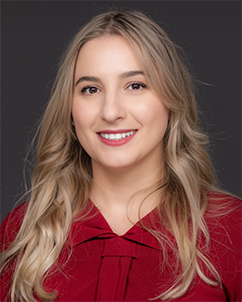
Dr. Hernisa Kacorri
Associate Professor, Accessibility and HCI

Dr. Ido Sivan-Sevilla
Assistant Professor, Digital Risk Governance
Meet MIM Alumni

Nikole Grandez, InfoSci ’23, MIM ’25
IT Specialist
Business Owner
“You have these technical systems, but people are the ones driving…that mindset of, ‘I don’t fully understand this yet, but I have to figure it out’, is exactly what I use professionally.”

Aditya Kiran Aswin Kumar, MIM ’24
Software Engineer,
Para Business Systems
“The MIM program isn’t just a degree. It is a transformative journey that equips you with the skills and the confidence required to excel in your career. I owe much of my professional success to the MIM program and the College of Information.”
 Aderonke Adeniji, MIM ’05
Deputy Chief Information Security Officer,
U.S. House of Representatives
In this video interview (external link, opens in a new tab), Aderonke shares how the MIM program’s technical, leadership, and people focused curriculum helped shape her career. “MIM gives you the perfect blend, where you’re dealing with people as you’re dealing with information.”
Contact Us (external link, opens in a new tab) Apply Now (external link, opens in a new tab)
Recent News
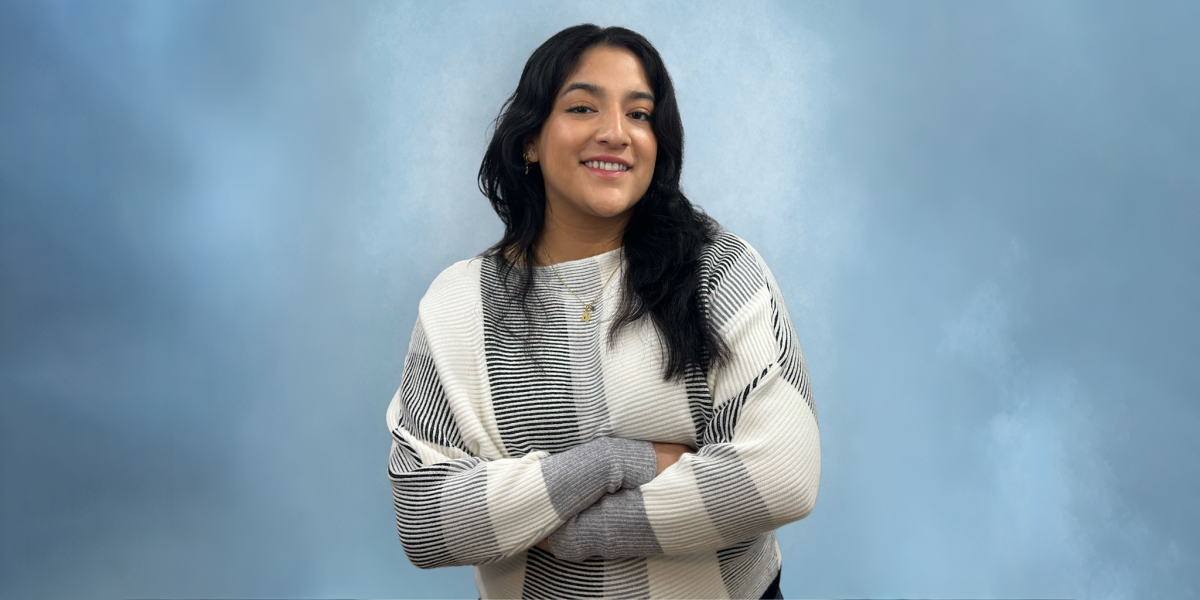
Nikole Grandez, InfoSci ’23, MIM ’25
Alumni Profile: Leveling Up: How a MIM Alum Built an IT Career on Curiosity and Grit
InfoSci and MIM alum Nikole Grandez turned persistence into a profession
Photo courtesy of Daniil Komov, Unsplash
Press Release: EveryCat Health Foundation Thanks University of Maryland for Extraordinary Data Research and Marketing Tools Project Contribution
University of Maryland College of Information students provided comprehensive insights in support of EveryCat Health Foundation’s 202 …Upcoming Events
To: Monday, August 31, 2026 - 5:00 pm